Friday, May 20, 2011
Roman Post II
The top three resources we should use in this class are http://www.historyforkids.org/learn/romans/index.htm http://www.pbs.org/empires/romans/ and http://ancienthistory.about.com/od/romans/a/102610-Ancient-Romans-A-To-Z.htm. These sources offer the most information about the art, people, ways of life, and virtually every other aspect of Rome. The first website has lots of useful information about the religion, food, clothing, and economy of Rome. The second and third websites have much information on the government structures, republics, and history of Rome. These are the three resources our class should use to learn more about Rome.

Thursday, May 19, 2011
Roman Post 1
Quiz #1:
1.Officials who appointed candidates to the Senate were censors.
2. A republic is a government where voters elect officials to run the state.
3. Forums were the center of all Government business.
4. Plebeians made up most of the society (farmers, etc.).
5. Praetors were officials who oversaw the Roman legal system.
Quiz #2:
1. Rome defeated Macedonia in 197 BC.
2. During the 3rd Punic War, the Romans destroyed the city of Carthage.
3. Carthage was a powerful city located along the African coast
4. The conflicts among Rome and Carthage were referred to as the Punic Wars.
5. Rome and Carthage fought 3 Punic Wars between 264 BC and 146 BC.
Quiz #3:
1. Lucius Cornelius Sulla was a Roman dictator, who reigned after he started/won a civil war.
2. Marc Anthony helped Octavian gain control of the West, and then was betrayed by him.
3. Julius Ceasar led his troops across the Rubicon and declared war on the Republic.
4. Pax Romania was a period of peace that lasted for over 200 years.
5. The Gracchis were brothers who attempted to save the Roman Republic through reforms.
Quiz #4:
1.Growing trade, good transportation, a strong government, revised laws, and a strong army all helped to unify and strengthen the Roman Empire.
2.Roman engineers were masters at building roads, bridges, arenas, and public buildings.
3.Over time, Roman religious beliefs were increasingly influenced by Greek thought.4.Gladiators were trained fighters and their fights most often ended in death.
5.The government passed new laws as needed and judges reinterpreted old laws to fit new circumstances.
Quiz #5:
1. In AD 312, the Roman emperor Constantine proclaimed his support of Christianity.
2. The spread of Christianity changed the culture of the Roman Empire.
3. The Council of Nicaea proclaimed the existance of the Trinity.
4. Pontius Pilate (Roman Governor) tried Jesus for being an enemy of the state.
5. In the late Roman Empire, Christianity became a major religion
Quiz #6:
1. Inflation, a rise in prices caused by a decrease in the value of money, became so severe that people stopped using money.
2. The emperor Diocletian thought the empire had grown too large for one emperor and appointed a co-emporer to rule the West.
3. In A.D. 324, Constantine became the sole emperor again and built a beautiful capital city in the East.
4. Although Diocletian and Constantine held the empire's borders, invaders from Germany were a constant threat as they fled from the Huns.
5.The empire in the West did not "fall" in a single day or from a single occurrence; instead, the empire in the West gradually declined over a long period.
1.Officials who appointed candidates to the Senate were censors.
2. A republic is a government where voters elect officials to run the state.
3. Forums were the center of all Government business.
4. Plebeians made up most of the society (farmers, etc.).
5. Praetors were officials who oversaw the Roman legal system.
Quiz #2:
1. Rome defeated Macedonia in 197 BC.
2. During the 3rd Punic War, the Romans destroyed the city of Carthage.
3. Carthage was a powerful city located along the African coast
4. The conflicts among Rome and Carthage were referred to as the Punic Wars.
5. Rome and Carthage fought 3 Punic Wars between 264 BC and 146 BC.
Quiz #3:
1. Lucius Cornelius Sulla was a Roman dictator, who reigned after he started/won a civil war.
2. Marc Anthony helped Octavian gain control of the West, and then was betrayed by him.
3. Julius Ceasar led his troops across the Rubicon and declared war on the Republic.
4. Pax Romania was a period of peace that lasted for over 200 years.
5. The Gracchis were brothers who attempted to save the Roman Republic through reforms.
Quiz #4:
1.Growing trade, good transportation, a strong government, revised laws, and a strong army all helped to unify and strengthen the Roman Empire.
2.Roman engineers were masters at building roads, bridges, arenas, and public buildings.
3.Over time, Roman religious beliefs were increasingly influenced by Greek thought.4.Gladiators were trained fighters and their fights most often ended in death.
5.The government passed new laws as needed and judges reinterpreted old laws to fit new circumstances.
Quiz #5:
1. In AD 312, the Roman emperor Constantine proclaimed his support of Christianity.
2. The spread of Christianity changed the culture of the Roman Empire.
3. The Council of Nicaea proclaimed the existance of the Trinity.
4. Pontius Pilate (Roman Governor) tried Jesus for being an enemy of the state.
5. In the late Roman Empire, Christianity became a major religion
Quiz #6:
1. Inflation, a rise in prices caused by a decrease in the value of money, became so severe that people stopped using money.
2. The emperor Diocletian thought the empire had grown too large for one emperor and appointed a co-emporer to rule the West.
3. In A.D. 324, Constantine became the sole emperor again and built a beautiful capital city in the East.
4. Although Diocletian and Constantine held the empire's borders, invaders from Germany were a constant threat as they fled from the Huns.
5.The empire in the West did not "fall" in a single day or from a single occurrence; instead, the empire in the West gradually declined over a long period.
Monday, April 11, 2011
Tuesday, April 5, 2011
GREEK BLOG #5
1. Democracy
2. Anatomy/Science
3. Military
4. Architecture
5. Olympics
The Greeks were the first to employ a Democratic government. We still use many of the general political ideas they had today. The scientfic and anatomical discoveries the Greeks unearthed contributed very much to our science today. The military ideas the Greeks had and were revolutionary and ingenious and have inspired some of our military today. Greek architecture is very much prevelant in architecture today. Columns are used today. The Olympics is a world renowned event that brings countries today to compete in athletics and is very important to people today.
2. Anatomy/Science
3. Military
4. Architecture
5. Olympics
The Greeks were the first to employ a Democratic government. We still use many of the general political ideas they had today. The scientfic and anatomical discoveries the Greeks unearthed contributed very much to our science today. The military ideas the Greeks had and were revolutionary and ingenious and have inspired some of our military today. Greek architecture is very much prevelant in architecture today. Columns are used today. The Olympics is a world renowned event that brings countries today to compete in athletics and is very important to people today.
Wednesday, March 30, 2011
GREEK BLOG #4

Monday, March 28, 2011
GREEK BLOG #2 -
Sparta and Athens were similar in many ways but had a few main differences. The way they were most similar was in their form of government. Both had a government whose members were elected by the people, called an assembly. However, Sparta was ruled by two kings who ruled untile they died, while Athens was ruled by archons who were elected annually. Athens is said to be the birthplace of democracy. One of the main differences in Athens and Sparta was the way they got along with the rest of the Greeks. Sparta was content to keep to itself, while Athens wanted to expand and conquer and control more land. This eventually led to the Peloponnesian War.
I would want to live in Athens. Life in Sparta was simple but focused mainly on obedience and war. Girls in Sparta were trained to be mothers of warriors. Athens on the other hand was much more creative. In Athens you could get a good education and pursue any of several kinds of arts or sciences.
http://www.diffen.com/difference/Athens_vs_Sparta
http://www.socialstudiesforkids.com/articles/worldhistory/athenssparta.htm
I would want to live in Athens. Life in Sparta was simple but focused mainly on obedience and war. Girls in Sparta were trained to be mothers of warriors. Athens on the other hand was much more creative. In Athens you could get a good education and pursue any of several kinds of arts or sciences.
http://www.diffen.com/difference/Athens_vs_Sparta
http://www.socialstudiesforkids.com/articles/worldhistory/athenssparta.htm
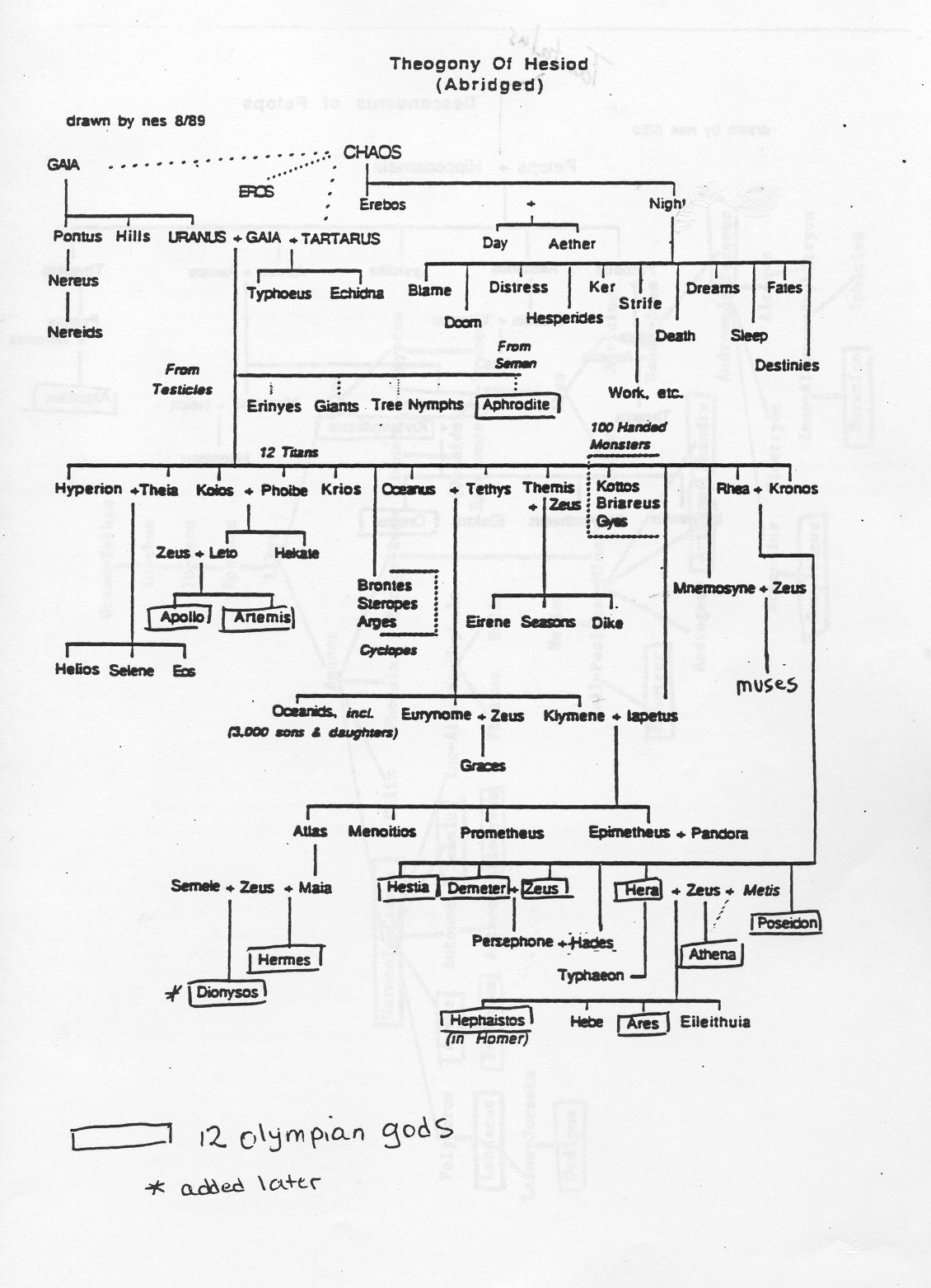
GREEK BLOG #3 -
http://www.greekmythology.com/
http://www.theoi.com/
http://www.mythweb.com/
http://www.desy.de/gna/interpedia/greek_myth/greek_myth.html
http://www.google.com/imgres?imgurl=http://images2.wikia.nocookie.net/__cb20110104110347/olympians/images/thumb/2/29/GREEK_GODS_AND_GODDESSES.jpg/158px-GREEK_GODS_AND_GODDESSES.jpg&imgrefurl=http://camphalfblood.wikia.com/wiki/Olympians&usg=__SEK7_HdRXO9Rw8PtsoqFxoO7fYU=&h=185&w=158&sz=14&hl=en&start=8&zoom=1&um=1&itbs=1&tbnid=Jqp0fwHD5R-3CM:&tbnh=102&tbnw=87&prev=/images%3Fq%3Dgreek%2Bolympian%2Bgods%2Band%2Bgoddesses%26um%3D1%26hl%3Den%26safe%3Dactive%26gbv%3D2%26tbs%3Disch:1&ei=u6qQTYrsEuay0QHe9OHGCw


http://www.theoi.com/
http://www.mythweb.com/
http://www.desy.de/gna/interpedia/greek_myth/greek_myth.html
http://www.google.com/imgres?imgurl=http://images2.wikia.nocookie.net/__cb20110104110347/olympians/images/thumb/2/29/GREEK_GODS_AND_GODDESSES.jpg/158px-GREEK_GODS_AND_GODDESSES.jpg&imgrefurl=http://camphalfblood.wikia.com/wiki/Olympians&usg=__SEK7_HdRXO9Rw8PtsoqFxoO7fYU=&h=185&w=158&sz=14&hl=en&start=8&zoom=1&um=1&itbs=1&tbnid=Jqp0fwHD5R-3CM:&tbnh=102&tbnw=87&prev=/images%3Fq%3Dgreek%2Bolympian%2Bgods%2Band%2Bgoddesses%26um%3D1%26hl%3Den%26safe%3Dactive%26gbv%3D2%26tbs%3Disch:1&ei=u6qQTYrsEuay0QHe9OHGCw


Subscribe to:
Posts (Atom)